Tristan Day
AI Alignment Researcher · Research Fellow, CBAI · Cambridge, MA
I study what language m3odels represent about themselves: metacognition, persona structure, and indicators of awareness using mechanistic interpretability.
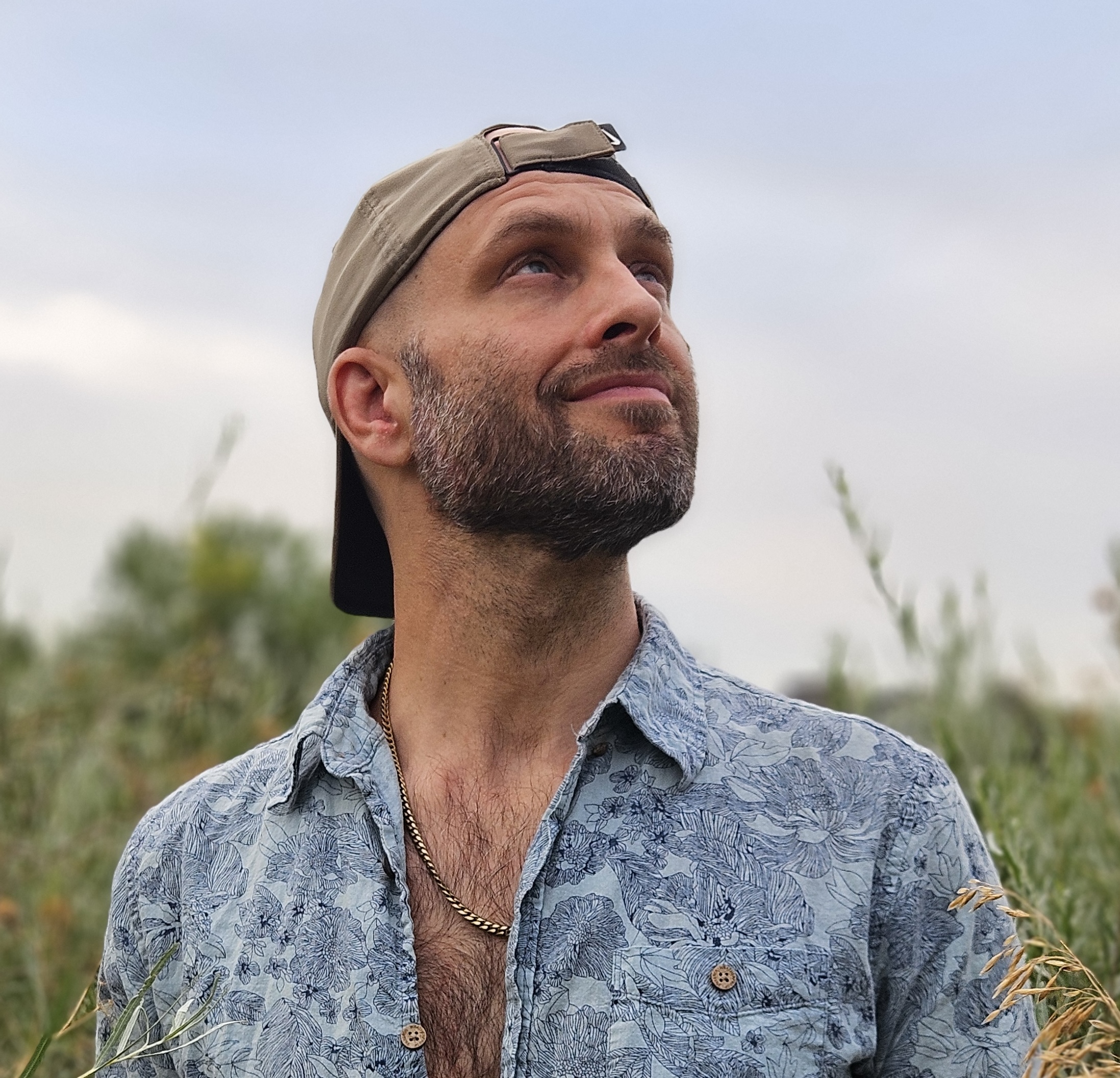
I’m a Research Fellow at the Cambridge Boston Alignment Initiative (CBAI), where I study metacognition, self-modeling, and persona-dependent behavior in language models. My work asks when a model’s self-reports and behavioral differences reflect shallow stylistic patterns versus deeper internal representations, using behavioral experiments and mechanistic interpretability.
My background spans cognitive science including computational neuroscience, complexity science, psychology, and philosophy of mind.
I’m currently based in Cambridge, MA, where I participate in research and AI safety communities around Harvard, MIT, and CBAI. My research includes collaborations with Laura Ruis (UCL/MIT), Belinda Li (MIT/Anthropic), Dmitrii Troitskii (CBAI), and SPAR mentor Christopher Ackerman. With Christopher, I’m investigating latent metacognitive capability in language models, which we are presenting at the 2026 ICML Mechanistic Interpretability Workshop.
Outside of research, I enjoy philosophy, meditation, occasionally making music, and travel.
Fine-Tuning Enhances Latent Metacognitive Capability in Language Models
An investigation into whether LLMs contain pre-existing internal structure supporting self-evaluation of answer uncertainty, and whether fine-tuning routes (rather than installs) this structure into confidence reports.
How Deep Do Personas Go? A Mechanistic Account of Persona Representation in Language Models
A mechanistic-interpretability investigation into persona representation and cross-persona privileged access in language models. Using Llama 3.1 8B and Dolphin 2.8 24B Mistral, I study how persona identity is represented across the network. Preliminary analyses suggest persona identity is linearly separable in early layers, with mid-layer activation divergence consistent with persona-dependent representational differences. Methods: linear probes, CKA/SVCCA/Procrustes, activation patching, logit lens, and SelfIE/Patchscopes.
Emotion Beyond Words: A Jacobian-Lens Decomposition of Emotion Representations in Qwen3-32B
How much of a language model’s internal emotion representation is accessible to verbal report? I found that Qwen3-32B’s emotion representations reproduce the human valence–arousal circumplex—organizing emotions along dimensions similar to pleasantness and activation—within a richer, approximately 10-dimensional geometry. Using the Jacobian Lens, I then investigated how much of these representations is accessible through the model’s verbal readout machinery, exploring whether internal representation, verbal reportability, and behavioral influence can come apart.
Consciousness Indicators for AI Systems
Planning work to operationalize indicators of consciousness into properties that can be evaluated in various AI systems, building on the Butlin–Long et al. indicator framework. Project planning and early discussions with Chris Percy.
Connectome Harmonics
International computational-neuroscience collaboration analyzing University of Oxford diffusion-MRI data to characterize changing brain-network structure over the lifespan, using spectral graph methods.
Teaching Assistant, Advanced Neurophysiological Psychology (400-level), Portland State University, 2019. Science-outreach educator with Northwest Noggin, 2017–2021, teaching neuroscience to K–12 students and adults in schools, public science events, and correctional facilities. Poster presenter, Society for Neuroscience Annual Meeting, 2018 and 2019.
I also have a long-standing interest in contemplative traditions and philosophy of mind, including meditation practice and Buddhist thought. I have completed a 10-day silent Vipassana meditation and several other multi-day retreats in the Theravada and Tibetan Buddhist traditions.
Earlier exploratory projects connecting AI, neuroscience, and cognitive science.
Explored neuro-symbolic approaches to ARC-style reasoning tasks, combining learned pattern recognition with explicit rule extraction to study limitations of current reasoning systems.
Used representation-analysis methods, including Procrustes alignment, PCA, and clustering, to connect neural-network representations to questions about substrate independence and computational theories of mind.
Built preliminary ML components for EEG seizure classification, including transformer and VAE-inspired approaches to frequency-domain time-series data.
Proposed a binocular-rivalry experiment to test a predictive-coding account of conscious visual perception. The project explored whether the visual system can synthesize a unified percept from two partially blurred versions of the same image, and proposed using EEG frequency tagging to investigate where clear and blurry visual signals diverge in the visual pathway. (Published under a previous name)
Replicated biologically inspired spiking-neural-network methods for image classification.